English
▼
Comprehensive understanding of sudoku's historical origins, basic rules, solving techniques, and advanced gameplay. From beginner to master, become a sudoku expert.
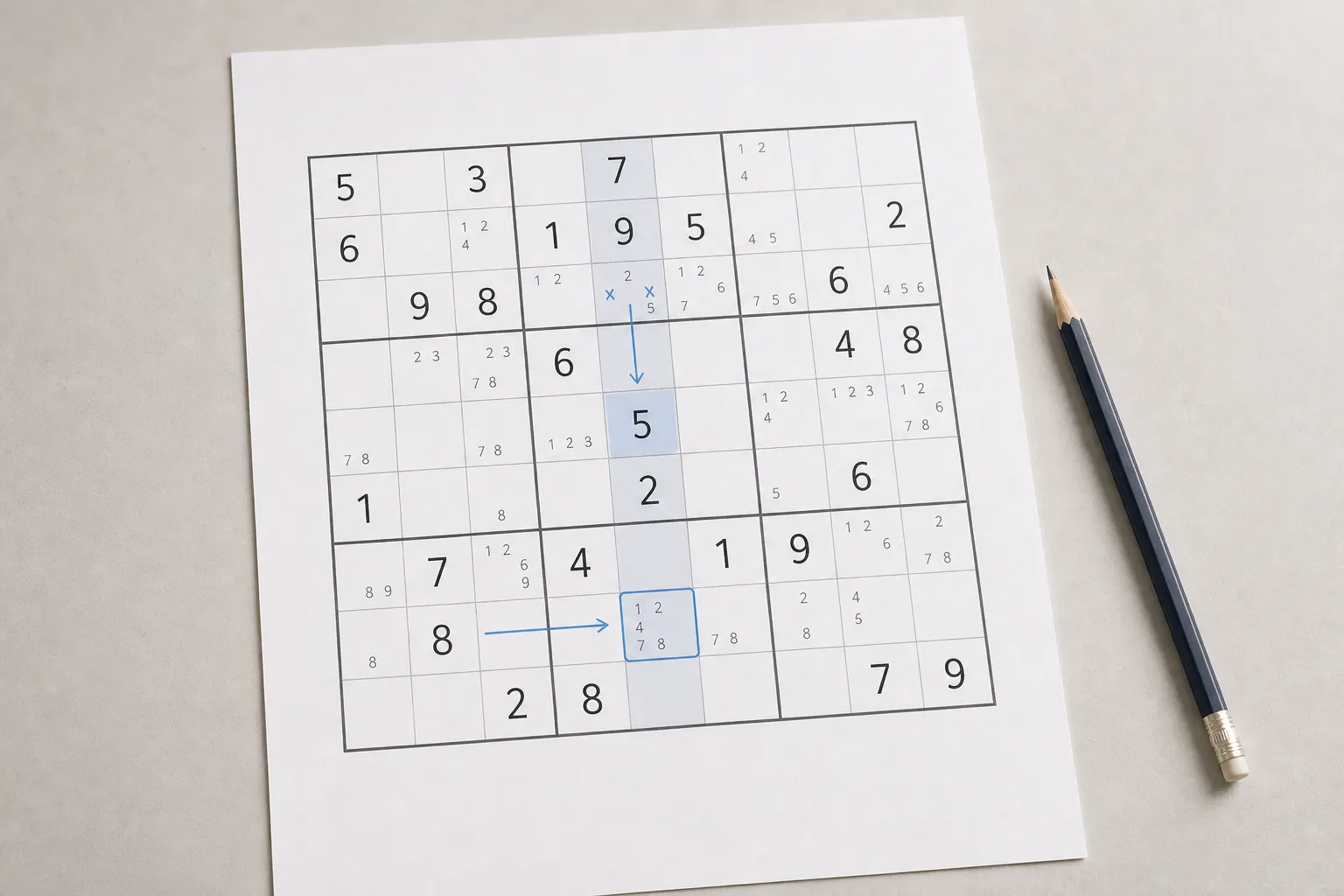
Sudoku is a classic digital logic game whose history can be traced back to 18th century Switzerland. At that time, Swiss mathematician Leonhard Euler invented a mathematical game called "Latin Square", which is considered the predecessor of Sudoku.
The real development of modern Sudoku began in the 1970s in the United States. In 1979, American magazine Dell Magazines began publishing puzzles called "Number Place", which is the prototype of modern Sudoku. However, it was Japan that truly made Sudoku popular worldwide.
In 1984, Maki Kaji, founder of Japanese game magazine Nikoli, introduced this game to Japan and named it "Sudoku" (すうどく, Sūdoku), meaning "single numbers" or "numbers appear only once". Sudoku quickly became popular in Japan and gradually spread around the world.
In 2004, The Times (UK) began publishing Sudoku puzzles, marking Sudoku's official entry into Western mainstream media. Subsequently, Sudoku rapidly became popular globally, becoming one of the most beloved logic games.

The rules of Sudoku are very simple, but the solving process is full of challenges. Standard Sudoku is a 9×9 grid divided into nine 3×3 small boxes. The objective of the game is to fill numbers 1-9 in the grid so that:
At the beginning of the game, some numbers are already filled in the grid. These numbers are called "given numbers" or "clues". The player's task is to fill in the remaining numbers through logical reasoning based on these given numbers.

Naked Single: When a cell can only contain one possible number based on its row, column, and box constraints, that number is the naked single.
Hidden Single: When a number can only be placed in one specific cell within a row, column, or box, even if that cell has other candidates, that number must be placed there.
Candidate Elimination: By analyzing the distribution of numbers in a certain area, candidates for certain positions can be eliminated.
Pairs Technique: When two cells in the same row, column, or box can only contain the same two numbers, these two numbers cannot appear in other positions in that area.
X-Wing Technique: When a number can only appear in the same two columns in two rows, this number cannot appear in other positions in these two columns.
Swordfish Technique: An extension of the X-Wing technique, involving three rows and three columns.
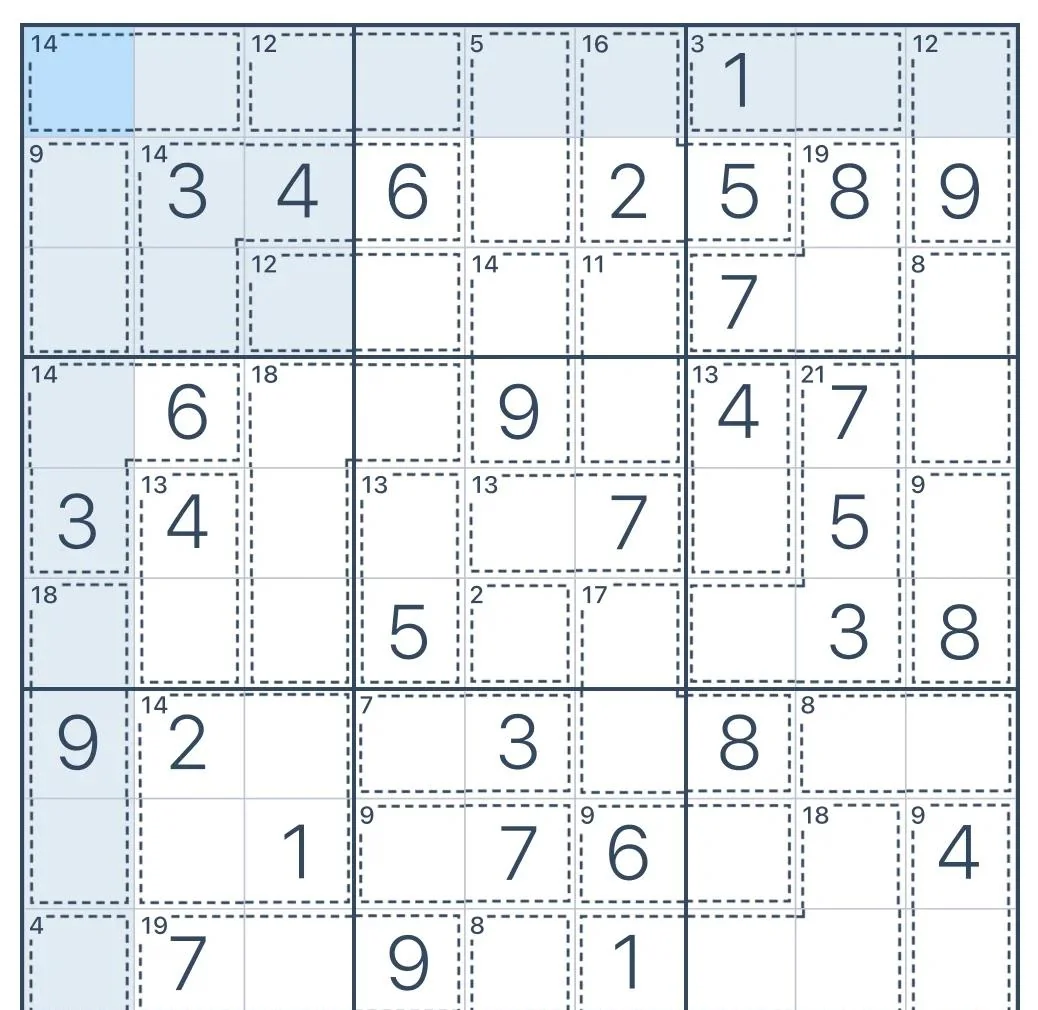
As a classic logic game, Sudoku has various gameplay formats, from basic standard Sudoku to various creative variants, meeting the needs of different players.
Classic 9×9 Sudoku: The most basic and popular Sudoku format, filling numbers 1-9 in a 9×9 grid to ensure no repetition in each row, column, and 3×3 box.
Difficulty Levels: Standard Sudoku is usually divided into four difficulty levels: easy, medium, hard, and expert, suitable for players of different levels.
Timed Challenges: Many players enjoy completing Sudoku with timing, challenging their solving speed and logical thinking abilities.
In addition to standard Sudoku, there are many interesting variant games that add new challenges and fun to the game:
Diagonal Sudoku: Besides the rules for rows, columns, and boxes, the two main diagonals must also contain numbers 1-9 without repetition.
Killer Sudoku: Based on standard Sudoku, adds sum requirements for regions, where the sum of numbers in each region must equal a specified value.
Jigsaw Sudoku: Boxes are no longer regular 3×3 shapes but irregular shapes.
Hyper Sudoku: Based on standard Sudoku, adds four additional 3×3 regions.
Color Sudoku: Uses colors instead of numbers, or uses colors as additional constraints.
Wordoku: Uses letters instead of numbers, sometimes forming meaningful words.
Window Sudoku: Based on standard Sudoku, adds four overlapping 3×3 window regions.
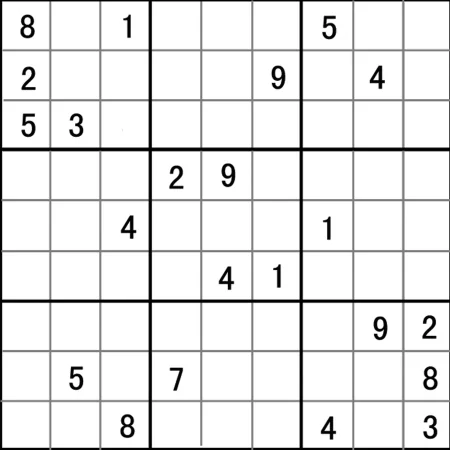
Sudoku difficulty is not determined only by the number of given digits. It also depends on whether the solving path is direct, which techniques are required, and how complex the candidate reasoning becomes. Understanding difficulty levels helps players choose suitable puzzles and build a steady solving rhythm. Sudoku100 provides 6 standard levels, from beginner to extreme challenges.
Characteristics: More given digits, clear solving paths, and puzzles that can usually be completed with row, column, box observation and singles.
Suitable for: Sudoku beginners, children, seniors, and players who want a relaxed way to learn the rules.
Main solving methods: Naked singles, hidden singles, and basic elimination.
Characteristics: Still built around basic logic, but players need to compare more rows, columns, and boxes actively.
Suitable for: Players who already understand the rules and want reliable practice beyond the first step.
Main solving methods: Basic elimination, box-line reduction, and simple candidate notes.
Characteristics: Direct placements become less frequent, so candidates and local region relationships matter more.
Suitable for: Players with some experience who want to learn combinations of techniques.
Main solving methods: Pairs, triples, and block elimination.
Characteristics: The solving path is longer and often requires reasoning across multiple regions.
Suitable for: Players who are comfortable with candidates and enjoy complex logic challenges.
Main solving methods: X-Wing, XY-Wing, and Unique Rectangle.
Characteristics: Usually requires several advanced techniques in combination; observation alone is rarely enough to progress.
Suitable for: Advanced players, competition trainees, and anyone seeking high-level logical challenges.
Main solving methods: Swordfish, forcing chains, and multi-value chains.
Characteristics: The highest challenge level, often requiring long-chain reasoning, complex pattern recognition, and patience.
Suitable for: Top-level players, serious competitors, and players who want the hardest solving experience.
Main solving methods: Advanced technique combinations, including complex reasoning chains, ALS techniques, and pattern recognition.
Choosing the right difficulty is the key to enjoying Sudoku. Beginners should start with beginner puzzles and increase difficulty gradually, gaining confidence while improving logical reasoning in a systematic way.
Sudoku is not just an entertainment activity; it also has important educational value:
Improves Logical Thinking: Sudoku requires rigorous logical reasoning, effectively training the brain's logical thinking abilities.
Cultivates Concentration: Solving Sudoku puzzles requires high concentration and patience, helping to cultivate focus.
Enhances Memory: During the solving process, multiple possible number combinations need to be remembered, helping to enhance working memory.
Relieves Stress: Sudoku is a great way to relax, helping people temporarily forget worries and relieve stress.

Sudoku has become an official intellectual sport, with various levels of Sudoku competitions held worldwide and a comprehensive ability certification system established.
World Sudoku Championship: Hosted by World Puzzle Federation, held since 2006, is the highest-level international Sudoku competition. It attracts top players from over 30 countries annually.
World Youth Sudoku Championship: A global competition specially established for young players, divided into different age groups, cultivating young Sudoku talents.
International Sudoku Open: An open competition for global Sudoku enthusiasts, with relatively low entry barriers, encouraging more people to participate.
Asian Sudoku Championship: The highest-level Sudoku competition in the Asian region, hosted by Asian Puzzle Federation, attracting players from Asian countries like China, Japan, and South Korea.
European Sudoku Championship: A competition gathering top Sudoku players from European countries, with strong teams from countries like UK, Germany, and France.
North American Sudoku Championship: An important event for Sudoku enthusiasts in the United States and Canada, attracting many participants annually.
As a global intellectual game, Sudoku has a huge player base worldwide. According to multiple surveys and studies, the distribution of Sudoku players is as follows:
Youth Group (13-18 years): Approximately 15% of total players. Students in this age group use Sudoku as a tool for mathematical training and logical thinking development.
Young Adult Group (19-35 years): Approximately 35% of total players. Players in this age group are mainly university students and young professionals, using Sudoku for leisure entertainment and mental exercise.
Middle-aged Group (36-55 years): Approximately 30% of total players. Players in this age group are mostly professionals, using Sudoku to relieve work stress and keep their brains active.
Senior Group (56+ years): Approximately 20% of total players. Players in this age group use Sudoku to prevent cognitive decline and maintain mental agility.
Japan: As one of the birthplaces of Sudoku, Japan has the largest Sudoku player base. According to Japan Sudoku Association statistics, Japan has over 20 million active Sudoku players.
China: With the popularization of Sudoku in China, the number of players has grown rapidly. According to China Sudoku Association data, China has over 15 million Sudoku enthusiasts.
India: India is one of the fastest-growing countries for Sudoku players, with about 10 million players.
Europe: European countries like UK, Germany, France have millions of Sudoku players combined.
United States: The United States currently has about 12 million Sudoku players, mainly concentrated in highly educated groups.
Overall, the total number of global Sudoku players is estimated to exceed 100 million, and this number continues to grow.
This article's content references the following authoritative sources:
Start with beginner puzzles, get comfortable with the rules, then move into techniques and higher difficulty levels.